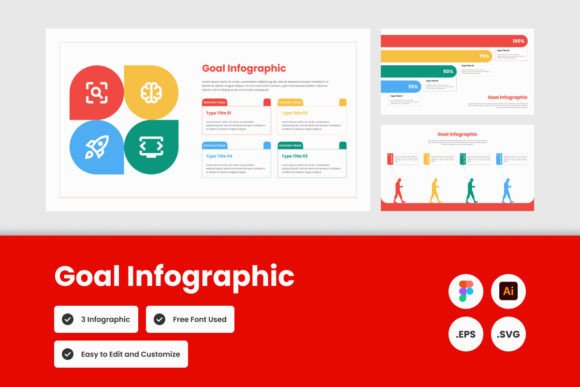
Goal Infographic Template V3: Modern Graphics for Infographics
When a client approaches me with a request to visualize their quarterly roadmap or a new employee onboarding strategy, my first instinct is to look for structure before style. However, in the current landscape of small business branding and digital marketing, the line between functional data and engaging art has blurred. I recently pulled Goal Infographic Template V3 from my library of design assets to evaluate its viability for a boutique coaching firm launching a new "Vision to Action" workshop series. My initial impression was one of balanced sophistication; this isn't just a collection of arrows and boxes, but a curated graphic design asset that understands the psychology of progress.
The visual mood created by this template is aspirational yet grounded. It avoids the sterile, corporate blue-and-grey palette that often plagues business presentations, opting instead for a layout that feels dynamic and forward-moving. For designers working in the creative marketplace, finding a balance between professional credibility and visual excitement is crucial. This template achieves that by offering a framework that feels like a modern design statement rather than a dry spreadsheet. It naturally fits projects where the narrative of growth is just as important as the data itself, making it an ideal candidate for marketing visuals that need to stop the scroll on social media or hold attention during a live presentation.
Integrating Structured Visuals into Diverse Brand Ecosystems
In a real-world design scenario, versatility is king. I tested how Goal Infographic Template V3 could adapt beyond its primary function as a slide deck element. For a handmade business looking to share their production timeline with customers, this template served as an excellent foundation for packaging design inserts. By tweaking the color values to match the brand's earthy tones, the infographic transformed into a story-telling device that explained the journey from raw material to finished product. This approach elevates the perceived value of the item, turning a simple receipt or thank-you card into a piece of editorial design.
The utility extends further into the realm of print-on-demand and merchandise. While infographics are typically digital, the clean lines and scalable nature of this asset allow it to be repurposed for t-shirt design or tote bags, particularly for motivational niches. Imagine a gym owner wanting to visualize a "30-Day Challenge" on apparel; the structural elements of this template provide a ready-made grid that ensures the design remains legible even when printed on fabric. Similarly, for Cricut projects and sticker design, the distinct shapes within the template can be isolated to create decorative accents for planners or journals, appealing to the massive market of productivity enthusiasts.
For digital sellers and creators of Canva templates, this asset is a goldmine. It can be deconstructed to build custom social media graphics for Instagram carousels or Pinterest pins. The key here is adaptation; by breaking the template down into individual components, you can create a cohesive series of posts that guide the viewer through a complex idea step-by-step. This transforms a static digital product into an interactive experience, significantly boosting audience engagement and time-on-page for blog visuals.
Strategic Placement and Layout Considerations
Understanding where Goal Infographic Template V3 shines is essential for maintaining visual hierarchy. It performs exceptionally well in large layout areas, such as hero graphics on a landing page or the centerpiece of a webinar slide. In these contexts, the detailed elements have room to breathe, allowing the viewer to absorb the information without feeling overwhelmed. It also works beautifully as a thematic collection header in a design bundle, setting the tone for a suite of related materials.
However, caution is required when deploying this asset in crowded layouts or small-scale applications. If you attempt to shrink the entire infographic for a mobile ad banner or a favicon, the intricate details may collapse, leading to a muddy appearance. It is not suitable for minimalist branding projects that rely on vast negative space and ultra-thin typography, as the structural weight of the infographic might clash with that aesthetic. Furthermore, in professional corporate materials that demand strict adherence to rigid brand guidelines, the creative flair of this template might need to be toned down to ensure it doesn't distract from the core message.
Impact on Readability, Trust, and Brand Perception
The ultimate test of any infographic is whether it clarifies or confuses. Goal Infographic Template V3 excels at enhancing readability by using visual cues to guide the eye logically from one goal to the next. This structured flow builds visual trust; when information is presented clearly, the audience perceives the brand as more competent and organized. For a logo design agency presenting a rebranding strategy, using this template to map out the phases of the project can make the process feel manageable and transparent to the client.
Emotionally, the design appeals to the desire for achievement. It taps into the motivational aspect of goal setting, making the audience feel empowered rather than burdened by tasks. This emotional connection is vital for content creators and bloggers who rely on audience retention. A well-designed graphic doesn't just inform; it inspires action. When used correctly, this asset elevates the overall impression of a design project, signaling that the creator cares about both the substance and the style of their communication.
Essential Designer Notes for Commercial Deployment
Before integrating Goal Infographic Template V3 into a paid client project, there are several technical checks every professional should perform. First, test the design in black and white. This ensures that the graphics rely on shape and contrast rather than just color to convey meaning, which is crucial for accessibility and monochrome printing. Next, check the contrast on both light and dark backgrounds. While the template likely comes with a default background, your client's brand colors might require you to place these elements over deep navies or vibrant yellows.
Preview the asset at various sizes. What looks crisp on a 27-inch monitor might lose definition on a smartphone screen. Always place the design on real product mockups to see how it interacts with shadows, textures, and perspective. If the file includes PNGs, inspect the transparency edges for halos or jagged pixels. If vector formats like SVG or EPS are available, verify the editability of the nodes to ensure you can customize the curves to fit specific brand contours.
Consider the typography pairing. Compare how the template looks alongside a sturdy sans serif font for a modern tech feel, or a classic serif font for an editorial touch. Avoid pairing it with overly decorative script fonts or handwritten fonts unless the goal is a very specific, playful vibe, as this can compromise legibility. Finally, and most importantly, confirm the commercial license. Ensure that the terms allow for use in client work, Etsy products, or unlimited print runs. Never assume; always read the fine print to protect your business and your client.
Showcase your ambitions with Goal Infographic Template V3 is more than just a tagline; it is a promise of functionality meeting aesthetics. Whether you are building a web design layout, crafting a sublimation design for mugs, or developing a comprehensive brand identity, this template offers a robust starting point. It reminds us that effective design is not just about making things look pretty, but about creating clear, compelling pathways for ideas to travel from the creator to the consumer. With careful customization and strategic application, this asset becomes a powerful tool in any designer's arsenal.