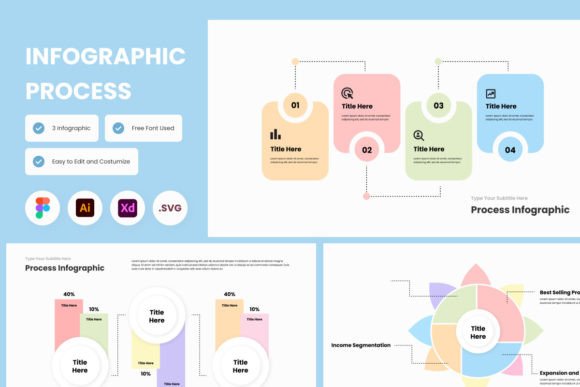
Process Infographic Template V1: Graphics for Branding
As a brand designer who has spent the last decade helping local businesses find their visual voice, I approach every new graphic design asset with a critical eye. It is not enough for a file to look good on a screen; it must hold its weight on a physical product label, survive the printing process, and communicate a brand's story instantly. Recently, I evaluated Process Infographic Template V1 for a potential project involving a boutique artisanal soap company, and my findings offer valuable insights for small business owners, handmade sellers, and creative entrepreneurs looking to elevate their brand identity.
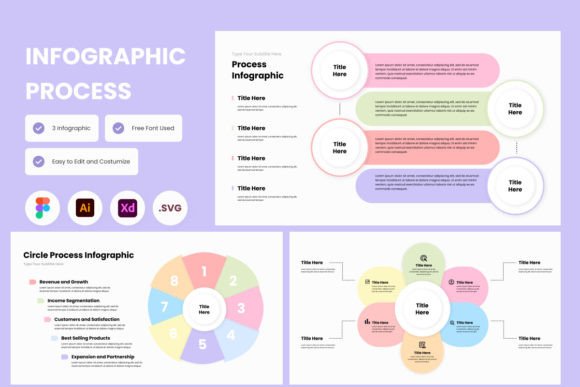
My first impression of Process Infographic Template V1 was one of structured clarity mixed with modern flexibility. Unlike many rigid templates that force your content into awkward boxes, this asset feels organic yet disciplined. The mood it creates is professional but approachable, suggesting a brand personality that values transparency and efficiency without sacrificing style. For a local business, such as a coffee shop explaining their bean-to-cup journey or a skincare brand detailing their natural ingredients, this template strikes the perfect balance between informative and decorative. It feels less like a cold corporate chart and more like a storytelling device, which is essential for building an emotional connection with customers.
Elevating Product Packaging and Local Brand Stories
The true test of any design asset is its application in real-world scenarios. In the context of packaging design, Process Infographic Template V1 shines as a tool for simplifying complex narratives. Imagine a handmade candle brand needing to explain their sustainable sourcing on a hang tag. This template allows you to organize information seamlessly, turning a dense paragraph of text into a visually engaging flow that customers actually want to read. By streamlining workflows visually, you make the product feel more premium and the brand more trustworthy.
Beyond packaging, the versatility of these Graphics extends to various touchpoints in a customer's journey. I can easily envision using this template for:
- Product Labels: Breaking down usage instructions or ingredient benefits on jars and bottles.
- Social Media Graphics: Creating swipeable carousel posts that educate followers about a service or product creation process.
- Thank-You Cards: Adding a small visual element that explains what happens after a purchase, enhancing the unboxing experience.
- Menu Graphics: Helping restaurant owners visualize the steps of their farm-to-table process.
- Promotional Ads: Clarifying service offerings in flyers and posters for seasonal campaigns.
For small business branding, consistency is key. Using a cohesive set of Infographics across your website banners, printed inserts, and marketing visuals ensures that your brand looks polished and intentional. This level of detail improves shelf appeal and helps your products stand out against competitors who might rely on text-heavy, confusing layouts.
Strategic Use for Stronger Visual Hierarchy
One of the most significant advantages of integrating Process Infographic Template V1 into your commercial design toolkit is the improvement in visual hierarchy. When customers scan a product or a webpage, they need to understand the value proposition immediately. This template guides the eye naturally from one step to the next, ensuring that the most important information is digestible at a glance. This clarity fosters better product recognition and instills confidence in the buyer, as it signals that the business is organized and professional.
However, a seasoned designer knows that no asset is a one-size-fits-all solution. There are specific contexts where Process Infographic Template V1 should be used with caution. For instance, in very small labels where space is at a premium, adding a detailed process graphic might crowd the layout, making legal information or ingredient lists hard to read. Similarly, for luxury minimalist brands that rely on vast negative space and serif typography, a busy infographic could compete with the elegant simplicity of the design. It is also crucial to avoid using these graphics on low-contrast backgrounds, as the details may get lost, reducing the overall impact of the marketing visuals.
Practical Notes for Designers and Business Owners
Before committing to this asset for a client project or your own handmade business, there are several practical steps I recommend taking to ensure success. First, always test the graphic on real product mockups. What looks crisp on a monitor might lose definition when printed on textured paper or a curved bottle. Check how the design performs in black and white, as many local businesses still utilize monochrome printing for cost-effective stickers or receipts.
Typography pairing is another critical consideration. While Process Infographic Template V1 is versatile, it pairs exceptionally well with clean sans serif fonts for a modern look or handwritten fonts for a more personal, artisanal feel. Avoid pairing it with overly decorative display fonts that might clash with the structured nature of the infographic. If you are working with vector files, inspect the SVG editability to ensure you can recolor elements to match your specific brand palette perfectly. For those using raster files, review the PNG transparency to guarantee seamless integration onto colored packaging materials.
Finally, always confirm the commercial license terms. Whether you are downloading this from a creative marketplace or purchasing it directly, understanding the rights regarding digital product sales and physical merchandise is vital. You need to be certain that you have the clearance to use these clipart or illustration elements for client work and mass-produced items.
In conclusion, Process Infographic Template V1 is a robust tool for unlocking the potential of your data and organizing information seamlessly. It empowers local business owners to visualize complex processes effortlessly, transforming dry facts into compelling brand stories. Whether you are designing for a food label, a boutique store, or a seasonal product campaign, this asset provides the structural foundation needed for professional branding. By applying it thoughtfully and testing it rigorously, you can create editorial design pieces and web design elements that not only inform but also inspire trust and loyalty in your community.